New Jersey has recently passed a law banning some sex offenders from using the internet.
Under the legislation, anyone who has been convicted of a committing a sexual offense and used a computer in that offense will not be allowed to use the internet.
The law makes exceptions for work use and job hunting.
Convicted sex offenders whose crime did not involve a computer may see their internet usage on home computers monitored by the government and find themselves subject to surprise checks of their computer equipment.
New rules created by NJ's state Parole Board follow in the same vein, according to the New York Times. They stop specific registered sex offenders who have been sentenced with "lifetime supervision" from accessing social networking sites like MySpace and Facebook, whether or not their original crime involved computers.
Megan's Law is a federal law that requires anyone who has been convicted of a sex offense to register their address in a publicly available database. Included under that umbrella of sex offenses are the big crimes, like rape and molestation, but also smaller ones, such as indecent exposure, misdemeanors, and charges relating to pornography, according to the Fresno County Sheriff's Web site.
Clearly, the New Jersey legislation is aimed at keeping offenders from circumventing the community awareness Megan's Law promotes in a local neighborhood by anonymously chatting with unsuspecting victims online.
Taking away access to social networking sites may eliminate or at least seriously reduce that risk. But how does taking away access to the entire internet, or entire computers, help? It seems rather like taking away an entire dictionary from someone because they might look up a bad word and use that to hurt someone.
I've never been an advocate for censorship. But in this case, it seems that carefully-selected online activities and Web sites can be banned or censored in such a way as to keep people safe... without seriously handicapping someone.
And really... though the internet is a virtual place... it does nothing if not provide just another tool to interact with the world. It would be nearly impossible for me to function normally without the internet in today's world.
When you hammer your finger instead of a nail, you don't blame the tool; you blame the operator. It would be a serious handicap to someone if, because of their crime, they weren't allowed to touch tools of any kind.
If New Jersey is really willing to handicap sex offenders so much... why let them out of jail at all?
"Let the punishment fit the crime." Lawmakers, the Parole Board, and community members need to be careful about punishing crimes in a big way. Let's hope they can step back from the hype surrounding sex offenders and give them a fair chance at normalcy.
Wednesday, January 2, 2008

Friday, December 14, 2007
Beacon may violate 1988 privacy law
According to this story by Computerworld, the Video Privacy Protection Act of 1988 bans rental companies from releasing personal records of movie rentals unless a customer gives them permission to do so in writing. It may mean Facebook's privacy harangle with Beacon is solved by the opt-out they added. In fact, it likely means the opt-out they've already installed becomes legally necessary.
A blogger broke this story first. It seems Blockbuster has for sure violated the law via Beacon, but the question remains whether or not Facebook can also be held liable.
Given that Facebook is not a movie rental company - only the format via which the information was published - I'd guess the law doesn't apply to them. The law does not ban publishing movie rental information... it only bans rental places from releasing such information.
A blogger broke this story first. It seems Blockbuster has for sure violated the law via Beacon, but the question remains whether or not Facebook can also be held liable.
Given that Facebook is not a movie rental company - only the format via which the information was published - I'd guess the law doesn't apply to them. The law does not ban publishing movie rental information... it only bans rental places from releasing such information.
Wednesday, December 5, 2007
Facebook privacy debacle is repeat headline
I'd like to say the news that has been heavily splashed everywhere about Facebook's most recent privacy-invading application is... well... news.
But it's just a repeat headline for the social networking site to invade user privacy via a new feature and then to back peddle a little after public outcry.
The News Feed was an application introduced in 2006, a few days before the site was opened to the public. It was supposed to conveniently share your information in bite-sized headlines to your friends, such as "Lacey Waymire and Dan Brown are no longer friends" and "Lacey posted more pictures." (It's just an example: Dan and I are still friends.) Trouble was, the feed would record and broadcast every move a user made on Facebook, and there was no way to turn it off.
The backlash then was immediate. More than 500,000 signatures protesting its use were collected on petitions within the first three days after the news feed was introduced. Today, the news feed has changeable options that let each user control how much information, if any, they want to share with their friends... the option is the product of two days of "nonstop coding," according to the developers who had to develop an emergency response to such a huge backlash.
Still, apparently, Facebook didn't learn... and it backed itself into nearly the same corner as before.
Beacon, an application that worked with partner sites such as blockbuster.com to publish news about who was buying what product, was introduced last month. It was designed as a sort of automated word-of-mouth advertising form. One man bought a diamond ring - a Christmas gift for his wife. She saw the news feed on her Facebook and the surprise was ruined. Many others were alarmed to see their purchasing habits posted across their friend's pages.
What I can't understand is this. Given their previous trouble with meddlesome applications that invade privacy, why didn't Facebook build in an opt-out option to this new application? It seems that Facebook, after its '06 debacle with privacy regarding the news feed, should be bending over backwards to fix its reputation.
Unfortunately, the privacy policy clearly specifies Facebook can share information about customers with affiliated companies connected to the applications you install. And Facebook is reluctant to give over privacy control to its customers when there is so much money to be made from connecting consumer to advertiser.
I guess they've got to pay the bills somehow.
Money seems a bad reason to stop listening to customer concerns about privacy again.
They say the third time is the charm. How next will the site try to capitalize on connections to friends?
But it's just a repeat headline for the social networking site to invade user privacy via a new feature and then to back peddle a little after public outcry.
The News Feed was an application introduced in 2006, a few days before the site was opened to the public. It was supposed to conveniently share your information in bite-sized headlines to your friends, such as "Lacey Waymire and Dan Brown are no longer friends" and "Lacey posted more pictures." (It's just an example: Dan and I are still friends.) Trouble was, the feed would record and broadcast every move a user made on Facebook, and there was no way to turn it off.
The backlash then was immediate. More than 500,000 signatures protesting its use were collected on petitions within the first three days after the news feed was introduced. Today, the news feed has changeable options that let each user control how much information, if any, they want to share with their friends... the option is the product of two days of "nonstop coding," according to the developers who had to develop an emergency response to such a huge backlash.
Still, apparently, Facebook didn't learn... and it backed itself into nearly the same corner as before.
Beacon, an application that worked with partner sites such as blockbuster.com to publish news about who was buying what product, was introduced last month. It was designed as a sort of automated word-of-mouth advertising form. One man bought a diamond ring - a Christmas gift for his wife. She saw the news feed on her Facebook and the surprise was ruined. Many others were alarmed to see their purchasing habits posted across their friend's pages.
What I can't understand is this. Given their previous trouble with meddlesome applications that invade privacy, why didn't Facebook build in an opt-out option to this new application? It seems that Facebook, after its '06 debacle with privacy regarding the news feed, should be bending over backwards to fix its reputation.
Unfortunately, the privacy policy clearly specifies Facebook can share information about customers with affiliated companies connected to the applications you install. And Facebook is reluctant to give over privacy control to its customers when there is so much money to be made from connecting consumer to advertiser.
I guess they've got to pay the bills somehow.
Money seems a bad reason to stop listening to customer concerns about privacy again.
They say the third time is the charm. How next will the site try to capitalize on connections to friends?
Sunday, December 2, 2007
LiveJournal: Private space, not public forum for free speech
LiveJournal, a free blogging Web site started in 1999, has just been sold to a Russian media company known as SUP Fabrik.
A deal like this - for an unspecified amount, and to a foreign media company whose investor is rumored to be Putin-friendly in a country already known for its censorship - recalls to mind that free speech rights are not international. Nor are they guaranteed when an American private company controls the content delivery method.
In America, free speech is most protected in public places. The courts have said over the years that the maximum protection to the right to free speech is given in these public forums, such as sidewalks, parks, and streets. However, absolute free speech protection is not a right on private property - some storefronts, for example. Each state differs in its definition of which malls are public places and which are private.
The internet isn't really a place. And it can certainly be argued that LiveJournal is a private business; one that puts substantial resources into providing the service, the storage space, the servers, etc. that allow users to express their opinions.
But it can also be argued that the free blog site is absolutely a public forum for expression, where assembly and discussion take place daily. Perhaps it is a sort of virtual "central park," with sidewalks freely available to all, and an irreplaceable service to the people who use it every day.
LJ has a long Terms of Service document that says "LiveJournal will generally not place a limit on the type or appropriateness of user content within journals," then goes on to list many limits on that content. Under the ToS, an account can be suspended or deactivated for posting anything that is copyrighted, harmful, indecent, pornographic, unlawful, vulgar, hateful, threatening, advertising, invading of someone's privacy, and more.
LJ also has what it calls an "Abuse team," which investigates blogs that are reported as being inappropriate. It has chosen to take an active role in monitoring and removing content that violates its ToS.
In May this year, LJ stirred a controversy by suspending about 500 accounts that were mostly fan fiction that may have included words like "incest" or "rape." Later, LJ apologized for shutting down the accounts and reinstated about half of them. In August LJ clarified that harmful content was:
The problem may lie in the fact that it takes resources to run a Web site, and understandably, those should be protected. But it costs money to keep a street or park maintained and functioning as a public place. Taxes collectively pay for those. It could be that, to provide a public space free of private speech restrictions, America will need to allocate resources to that end.
However it's done, commercial interests should not be allowed to trample completely on free speech rights that are so intrinsically important to the Internet, and to the country. Suspension of 500 accounts by LJ (or by any other blogging Web site) is a small number, but is still a number of people whose free speech rights might be getting trampled. It's for those few that the First Amendment exists at all.
A deal like this - for an unspecified amount, and to a foreign media company whose investor is rumored to be Putin-friendly in a country already known for its censorship - recalls to mind that free speech rights are not international. Nor are they guaranteed when an American private company controls the content delivery method.
In America, free speech is most protected in public places. The courts have said over the years that the maximum protection to the right to free speech is given in these public forums, such as sidewalks, parks, and streets. However, absolute free speech protection is not a right on private property - some storefronts, for example. Each state differs in its definition of which malls are public places and which are private.
The internet isn't really a place. And it can certainly be argued that LiveJournal is a private business; one that puts substantial resources into providing the service, the storage space, the servers, etc. that allow users to express their opinions.
But it can also be argued that the free blog site is absolutely a public forum for expression, where assembly and discussion take place daily. Perhaps it is a sort of virtual "central park," with sidewalks freely available to all, and an irreplaceable service to the people who use it every day.
LJ has a long Terms of Service document that says "LiveJournal will generally not place a limit on the type or appropriateness of user content within journals," then goes on to list many limits on that content. Under the ToS, an account can be suspended or deactivated for posting anything that is copyrighted, harmful, indecent, pornographic, unlawful, vulgar, hateful, threatening, advertising, invading of someone's privacy, and more.
LJ also has what it calls an "Abuse team," which investigates blogs that are reported as being inappropriate. It has chosen to take an active role in monitoring and removing content that violates its ToS.
In May this year, LJ stirred a controversy by suspending about 500 accounts that were mostly fan fiction that may have included words like "incest" or "rape." Later, LJ apologized for shutting down the accounts and reinstated about half of them. In August LJ clarified that harmful content was:
Content that encourages or advocates hate crimes, the abuse of children in any form, or rape, even if the content itself is not illegal and may be protected by the First Amendment. This portion of the policy reflects the especially reprehensible nature of these activities; users who encourage or advocate these acts, regardless of their motivation, are simply not welcome on LiveJournal.Freedom of speech gives the unpopular speech an equal right to exist in public space. But if a large blogging company is deemed private space, what on the internet is actually deemed public? So many of the ways content is shared are owned by private companies - YouTube, MySpace, Blogger, Facebook... There are internet service providers who provide Web site hosting services. Could those sites be also considered private space? Can any site be considered public?
The problem may lie in the fact that it takes resources to run a Web site, and understandably, those should be protected. But it costs money to keep a street or park maintained and functioning as a public place. Taxes collectively pay for those. It could be that, to provide a public space free of private speech restrictions, America will need to allocate resources to that end.
However it's done, commercial interests should not be allowed to trample completely on free speech rights that are so intrinsically important to the Internet, and to the country. Suspension of 500 accounts by LJ (or by any other blogging Web site) is a small number, but is still a number of people whose free speech rights might be getting trampled. It's for those few that the First Amendment exists at all.
Sunday, November 25, 2007
When legality and morality don't match: cyber-bullying and internet shaming
Five days ago, a small town in Missouri passed legislation outlawing online harassment in response to the story of one teen who committed suicide after insulting MySpace bulletins were posted about her.
According to the Suburban Journals story, 13-year-old Megan Meier had struck up a friendship on MySpace with a 16-year-old boy who at first was a good friend to her, then suddenly ended the friendship a year ago, saying he had heard she was mean to her friends.
In truth, the boy's profile was fabricated by a small group of people, including the mother of one of Megan's former friends in a neighboring household. More than one person had the password to the fake profile.
After reading the online insults, Megan hanged herself in her closet. She died the next day.
Megan's mother Tina said she believes her daughter died thinking the boy and his opinions of her were real.
According to an AP story, the unanimous resolution adopted by Dardenne Prairie city officials makes it punishable by a fine of $500 and up to 90 days in jail to cause someone "substantial emotional distress" online, or for an adult to contact a minor in such a way as to cause a reasonable parent to fear for the child's well-being.
The law comes too late to allow Tina to press charges against those involved in creating the fake MySpace account. Police so far have neither closed the case nor made any charges. And although Tina monitored her daughter's use of MySpace very closely, she had no way to offer protection against the hurtful words slung at her daughter.
According to a column by Suburban Journals writer Steve Pokin, who initially broke this story, there has been an outpouring of support for the Meier family both online and in their hometown.
And, according to a report by USA Today, the blogosphere has reacted by humiliating the family of the mother who participated in this fabrication. Piecing together clues from the original story, bloggers posted the mother's identity, address, phone numbers, workplace, and a satellite image of her house on rottenneighbor.com and other Web sites.
Neighbors have put up signs decrying the actions. The family's advertising business is being boycotted. People have held protests in front of the house and have made fake 911 calls that bring the police inside the house, according to this LA Times report.
Megan's parents have (perhaps understandably, but still illegally) also done physical damage to the property of their neighbors.
This example of internet shaming is better than a mob lynching, but only just.
Cyberbullying and lying about one's identity may not be illegal, but we can likely agree that some part of this exchange was immoral, and therefore should have been illegal. Taking steps to pass legislation, as the city did in this case, would be one step in solving that problem. It creates one more functional network between the ideal of morality and the structure of legality.
It's doubtful the new misdemeanor the city created can really provide the correct legal framework for addressing the larger moral issue--but it is one positive legal step that a healing community needs to take. For the most part, it's a healthy reaction.
The same cannot be said for internet shaming.
Confronting someone based on information about their actions that may or may not be true has a valid place. But maliciousness is maliciousness, no matter how strongly people feel that the cruelty is deserved.
Consider how this may have started. Two girlfriends ended their friendship. It seems there were some bitter feelings. No matter who was right or who was wrong in that break-up, someone decided that emotional cruelty was a deserved punishment, and used the fake profile to that end.
Now, internet vigilantes have made that same decision. And their cruelty isn't solving the problem... it's continuing the cycle.
Tell your congressman to push for legislation that brings justice to those who harm others maliciously online. Do something real for Megan Meier. Don't participate in the same cruelty used by the perpetrators. Learn from mistakes--and build a bridge between legality and morality.
According to the Suburban Journals story, 13-year-old Megan Meier had struck up a friendship on MySpace with a 16-year-old boy who at first was a good friend to her, then suddenly ended the friendship a year ago, saying he had heard she was mean to her friends.
In truth, the boy's profile was fabricated by a small group of people, including the mother of one of Megan's former friends in a neighboring household. More than one person had the password to the fake profile.
After reading the online insults, Megan hanged herself in her closet. She died the next day.
Megan's mother Tina said she believes her daughter died thinking the boy and his opinions of her were real.
According to an AP story, the unanimous resolution adopted by Dardenne Prairie city officials makes it punishable by a fine of $500 and up to 90 days in jail to cause someone "substantial emotional distress" online, or for an adult to contact a minor in such a way as to cause a reasonable parent to fear for the child's well-being.
The law comes too late to allow Tina to press charges against those involved in creating the fake MySpace account. Police so far have neither closed the case nor made any charges. And although Tina monitored her daughter's use of MySpace very closely, she had no way to offer protection against the hurtful words slung at her daughter.
According to a column by Suburban Journals writer Steve Pokin, who initially broke this story, there has been an outpouring of support for the Meier family both online and in their hometown.
And, according to a report by USA Today, the blogosphere has reacted by humiliating the family of the mother who participated in this fabrication. Piecing together clues from the original story, bloggers posted the mother's identity, address, phone numbers, workplace, and a satellite image of her house on rottenneighbor.com and other Web sites.
Neighbors have put up signs decrying the actions. The family's advertising business is being boycotted. People have held protests in front of the house and have made fake 911 calls that bring the police inside the house, according to this LA Times report.
Megan's parents have (perhaps understandably, but still illegally) also done physical damage to the property of their neighbors.
This example of internet shaming is better than a mob lynching, but only just.
Cyberbullying and lying about one's identity may not be illegal, but we can likely agree that some part of this exchange was immoral, and therefore should have been illegal. Taking steps to pass legislation, as the city did in this case, would be one step in solving that problem. It creates one more functional network between the ideal of morality and the structure of legality.
It's doubtful the new misdemeanor the city created can really provide the correct legal framework for addressing the larger moral issue--but it is one positive legal step that a healing community needs to take. For the most part, it's a healthy reaction.
The same cannot be said for internet shaming.
Confronting someone based on information about their actions that may or may not be true has a valid place. But maliciousness is maliciousness, no matter how strongly people feel that the cruelty is deserved.
Consider how this may have started. Two girlfriends ended their friendship. It seems there were some bitter feelings. No matter who was right or who was wrong in that break-up, someone decided that emotional cruelty was a deserved punishment, and used the fake profile to that end.
Now, internet vigilantes have made that same decision. And their cruelty isn't solving the problem... it's continuing the cycle.
Tell your congressman to push for legislation that brings justice to those who harm others maliciously online. Do something real for Megan Meier. Don't participate in the same cruelty used by the perpetrators. Learn from mistakes--and build a bridge between legality and morality.
Thursday, November 15, 2007
Review: Pushing Daisies is drama but comedy, modern but fantasy
Tim Burton's "Charlie and the Chocolate Factory" meets Jean-Pierre Jeunet's "The Fabulous Life of Amélie Poulin," and they get happy and land a TV series.
That's ABC's 8 p.m. Wednesday show "Pushing Daisies" in a nutshell.
Though set in a modern world, it feels like a fantasy, and the show would be dark if it wasn't so darn funny.
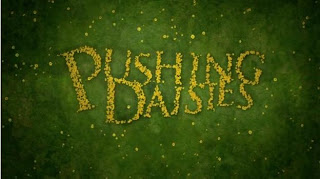 The main character, Ned (Lee Pace) discovers as a boy that he can touch the dead and bring them back to life. Unfortunately, if he touches them a second time, they will die again and this time cannot be brought back to life. His gift also comes with a price: to bring someone back to life, someone else in proximity must die.
If you're thinking that sounds similar to the life-giving-and-taking in Daniel Knauf's "Carnivále," don't. This show is about as dark or dusty as the kitchens of the robot women in "Stepford Wives"--that is to say, it is sparkling, polished, and shiny.
A private investigator ( Chi McBride) happens to discover Ned's extraordinary ability, and hatches a surly plan to collect reward money by investigating murders with Ned at his side. They interrogate the dead in a routine and hilarious manner before killing them again and collecting the reward money.
They run into trouble when Ned has to revive his childhood sweetheart (Anna Friel), who soon becomes a regular in their investigating team. Ned, who falls in love all over again, can't ever touch her or she will die, and they have to resort to amusing displays of affection (for example, kissing while wearing dry-cleaner bags).
Meanwhile Ned's neighbor Olive (Kristin Chenoweth) is jealously in love with Ned, and is forced to rely on Ned's dog for the companionship she longs for from Ned.
With episode names like "The Fun in Funeral," "Bitter Sweets," and "Corpsicle," the show promises to make light of the sadder side of life. A heavy feature are side characters who have severe social anxieties, from anorexia to social depression, that are casually solved in a narrated summation at the end of every episode.
The fact that what should be dark is made mostly hilarious adds to its charm and quirkiness. Fortunately for us, the humor does not overshadow important dramatic moments. The narrator (Jim Dale), who ties all the scenes together, does a soothing job of underlining their comedic or dramatic importance for us, similar to the narrator in "Amélie."
While quirky and charming, the narration sounds formulaic after only three episodes. "As Ned was (insert amusing verb with a short explanation of motives here), Olive was (insert wacky attempt to get attention from Ned here)..."
Every time Olive's desires for Ned seem to get too intense, a quick line from the narrator or an interruption of song places her role back firmly into the category of comedic. The line between serious and laughable is constantly danced on and chalked over, which makes the show feel like a dark, cartoony fantasy similar to "Charlie and the Chocolate Factory."
The creator is Bryan Fuller of "Dead Like Me" and "Wonderfalls." It airs at 8 p.m. Wednesdays on ABC. Be ready to laugh at death and to fall in love with the characters.
That's ABC's 8 p.m. Wednesday show "Pushing Daisies" in a nutshell.
Though set in a modern world, it feels like a fantasy, and the show would be dark if it wasn't so darn funny.
 The main character, Ned (Lee Pace) discovers as a boy that he can touch the dead and bring them back to life. Unfortunately, if he touches them a second time, they will die again and this time cannot be brought back to life. His gift also comes with a price: to bring someone back to life, someone else in proximity must die.
If you're thinking that sounds similar to the life-giving-and-taking in Daniel Knauf's "Carnivále," don't. This show is about as dark or dusty as the kitchens of the robot women in "Stepford Wives"--that is to say, it is sparkling, polished, and shiny.
A private investigator ( Chi McBride) happens to discover Ned's extraordinary ability, and hatches a surly plan to collect reward money by investigating murders with Ned at his side. They interrogate the dead in a routine and hilarious manner before killing them again and collecting the reward money.
They run into trouble when Ned has to revive his childhood sweetheart (Anna Friel), who soon becomes a regular in their investigating team. Ned, who falls in love all over again, can't ever touch her or she will die, and they have to resort to amusing displays of affection (for example, kissing while wearing dry-cleaner bags).
Meanwhile Ned's neighbor Olive (Kristin Chenoweth) is jealously in love with Ned, and is forced to rely on Ned's dog for the companionship she longs for from Ned.
With episode names like "The Fun in Funeral," "Bitter Sweets," and "Corpsicle," the show promises to make light of the sadder side of life. A heavy feature are side characters who have severe social anxieties, from anorexia to social depression, that are casually solved in a narrated summation at the end of every episode.
The fact that what should be dark is made mostly hilarious adds to its charm and quirkiness. Fortunately for us, the humor does not overshadow important dramatic moments. The narrator (Jim Dale), who ties all the scenes together, does a soothing job of underlining their comedic or dramatic importance for us, similar to the narrator in "Amélie."
While quirky and charming, the narration sounds formulaic after only three episodes. "As Ned was (insert amusing verb with a short explanation of motives here), Olive was (insert wacky attempt to get attention from Ned here)..."
Every time Olive's desires for Ned seem to get too intense, a quick line from the narrator or an interruption of song places her role back firmly into the category of comedic. The line between serious and laughable is constantly danced on and chalked over, which makes the show feel like a dark, cartoony fantasy similar to "Charlie and the Chocolate Factory."
The creator is Bryan Fuller of "Dead Like Me" and "Wonderfalls." It airs at 8 p.m. Wednesdays on ABC. Be ready to laugh at death and to fall in love with the characters.
Thursday, November 8, 2007
Dot Com What? - Ten Years Behind
When I want to learn about a new technology, I ask my little sister... not my teacher.
General Education classes are a repeat of high school classes.
Every job I apply for requires at least a bachelor's degree.
It takes me six years to graduate because classes are either too full or canceled.
When "real-world" experts come into my classes to speak, they admit they don't know what the future of my field will be.
When I want to know about current trends, I turn to Web sites run by professionals my age who understand what's going on... not my teachers.
And you wonder why I'm facebooking through my classes?
School today is especially irrelevant. I've heard it said that universities are typically ten years behind the times. (Let's make an exception for the Silicon Valley schools, which clearly have been internet innovators, not laggards.)
That puts schools even with innovations in 1997. Back then, the dot com bubble had just begun to rise. The Nintendo 64 was released, and for the first time a computer beat a World Champion chess player. And the first version of the Java programming language was a year old.
Wait, really? Java is 10 years old? Computers haven't always been more capable calculators than humans? Computer graphics look way better now than in the days of the Nintendo 64... We have really come a long way in a short period of time!
The pace of technological innovation is astounding. We've all heard the mantra "six months to obsoletion." Who wouldn't be scared by that? There's a lot to learn for anyone. I remember when I could skate by on an English assignment simply by making a Web page that impressed the teacher, who had no idea how to do such things. That was back in the day, you know... before xml replaced html.
Innovations are made to make things better, faster, easier, and prettier. It's exciting and daunting to learn about.
And the experts have to struggle to stay on top of it. They always have to learn new things to simply function. Teachers don't have to learn new things to function... they can teach the same old same old... but if they want to remain experts, they have to learn new things.
In all my journalism classes, I have never once been taught the basics of how to get a good photograph, nor how to capture and edit audio, nor how to build a dynamic Web site or to write for a dynamic Web site. If I do any of that, it's because my friends help me. It's because they know how to do it and because they understand why it's important.
I might find teachers who agree that I should be capable of all those things, but I won't find many teachers who are actually rebuilding their course work to reflect that.
People my age are interested in the new lifestyle the internet affords us, because we're living that lifestyle. And hungry to learn about it. Frankly the best way to do that for me is to talk (or facebook) to my friends, and my little sister's friends - people who adapt quickly to new technology, who aren't afraid of it, and who can teach me what they've learned by trial and error.
It's preferable to learn in a school setting, where concepts can be explained formally, and (ideally) textbooks can feed the fundamentals of new concepts for the hungry brain to devour. Academia has perfected learning over the last two thousand years. But lately those learning institutions have failed to be relevant in an environment where learning and adapting is everything.
General Education classes are a repeat of high school classes.
Every job I apply for requires at least a bachelor's degree.
It takes me six years to graduate because classes are either too full or canceled.
When "real-world" experts come into my classes to speak, they admit they don't know what the future of my field will be.
When I want to know about current trends, I turn to Web sites run by professionals my age who understand what's going on... not my teachers.
And you wonder why I'm facebooking through my classes?
School today is especially irrelevant. I've heard it said that universities are typically ten years behind the times. (Let's make an exception for the Silicon Valley schools, which clearly have been internet innovators, not laggards.)
That puts schools even with innovations in 1997. Back then, the dot com bubble had just begun to rise. The Nintendo 64 was released, and for the first time a computer beat a World Champion chess player. And the first version of the Java programming language was a year old.
Wait, really? Java is 10 years old? Computers haven't always been more capable calculators than humans? Computer graphics look way better now than in the days of the Nintendo 64... We have really come a long way in a short period of time!
The pace of technological innovation is astounding. We've all heard the mantra "six months to obsoletion." Who wouldn't be scared by that? There's a lot to learn for anyone. I remember when I could skate by on an English assignment simply by making a Web page that impressed the teacher, who had no idea how to do such things. That was back in the day, you know... before xml replaced html.
Innovations are made to make things better, faster, easier, and prettier. It's exciting and daunting to learn about.
And the experts have to struggle to stay on top of it. They always have to learn new things to simply function. Teachers don't have to learn new things to function... they can teach the same old same old... but if they want to remain experts, they have to learn new things.
In all my journalism classes, I have never once been taught the basics of how to get a good photograph, nor how to capture and edit audio, nor how to build a dynamic Web site or to write for a dynamic Web site. If I do any of that, it's because my friends help me. It's because they know how to do it and because they understand why it's important.
I might find teachers who agree that I should be capable of all those things, but I won't find many teachers who are actually rebuilding their course work to reflect that.
People my age are interested in the new lifestyle the internet affords us, because we're living that lifestyle. And hungry to learn about it. Frankly the best way to do that for me is to talk (or facebook) to my friends, and my little sister's friends - people who adapt quickly to new technology, who aren't afraid of it, and who can teach me what they've learned by trial and error.
It's preferable to learn in a school setting, where concepts can be explained formally, and (ideally) textbooks can feed the fundamentals of new concepts for the hungry brain to devour. Academia has perfected learning over the last two thousand years. But lately those learning institutions have failed to be relevant in an environment where learning and adapting is everything.
Subscribe to:
Posts (Atom)
